
To flee
Background
This game is about going into exil within Europe.
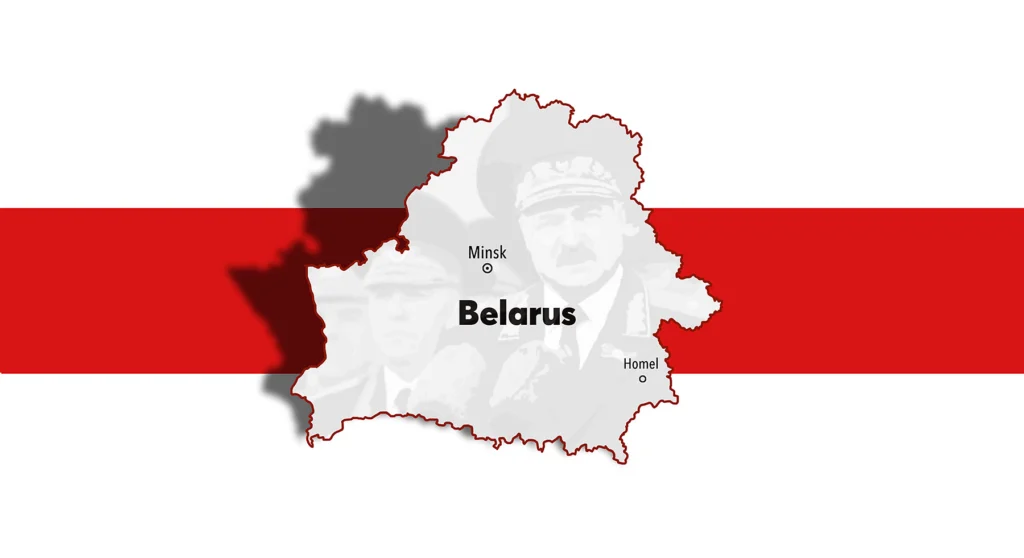
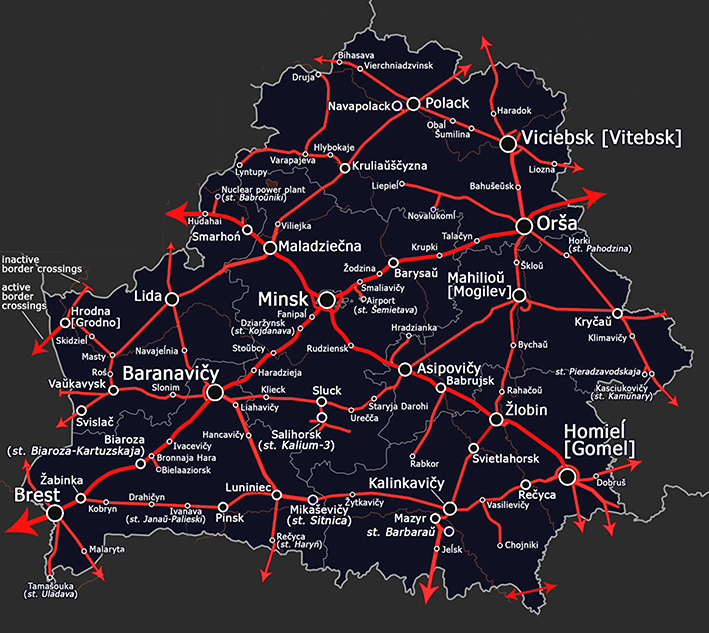
After the presidential election in August 2020, it has become increasingly difficult to live in Belarus, and thousands of Belarusians leave the country every month, mainly for neighboring Poland and Lithuania.
The reason is the regime of Alexander Lukashenko. During the 2010s, Belarus experienced a period of relative calm and a certain sense of freedom, during which a large IT sector—and a lucrative, internationally successful gaming industry—grew, especially around the capital Minsk.
Lukashenko’s regime allowed this sector to develop with little state interference, but when Sviatlana Tsikhanouskaya was allowed to challenge Lukashenko in the August 2020 election, everything changed. She was the wife of a well-known blogger and the actual presidential candidate but a housewife, so Lukasjenka did not think of her as a real threat.
But Tsikhanouskaya was extraordinarily successful, and people around her did everything possible to expose and counter the widespread electoral fraud that the incumbent president used to secure his power.
People voted for Tsikhanouskaya and could not accept the official result claiming that Lukashenko had once again received 80% of the vote.
Carnival-like but peaceful demonstrations followed, which were brutally suppressed by the police, despite being massive and continuing for several months.
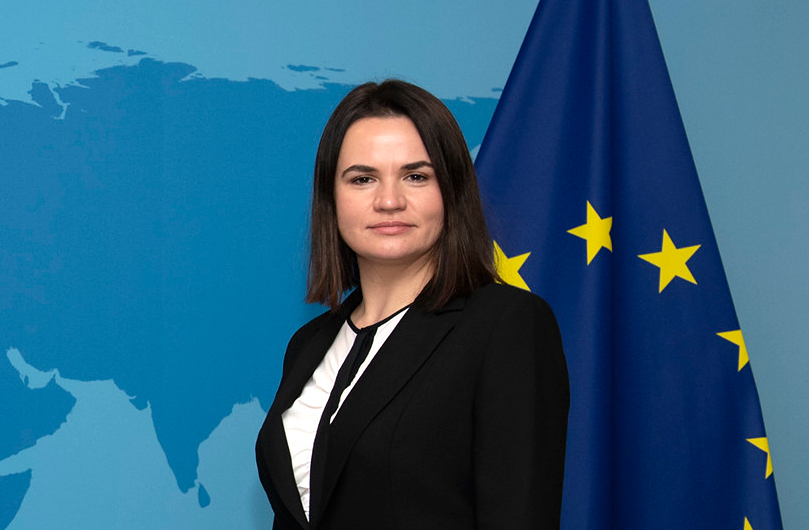
Tsikhanouskaya was forced to leave the country but was received within the European Union as the legitimate head of state of Belarus. All independent media outlets were shut down by the state, IT companies began relocating to Poland and Lithuania, and soon all civil society organizations—such as women’s groups and cultural associations—were also closed. All non-state activity was silenced, and thousands of citizens were imprisoned and given long sentences for participating in demonstrations or even expressing opinions on social media.
When the Russian invasion of Ukraine began in February 2022, partly through Belarus, the situation worsened further. Companies fled as financial transactions became difficult due to sanctions. Highly educated individuals and students also left the country.
The Gorkiy Family
The Gorkiy family consists of Roman (42), his wife Anna (41), Anna’s child Simon (15), and the couple’s son Anton (7). Roman holds a university degree in political science and was previously active in the democratic movement that emerged in Belarus after the collapse of the Soviet Union in 1991. He was involved in youth politics but was imprisoned by Lukashenko’s regime as early as 2004. He managed to avoid a long prison sentence, but his friends were sentenced to several years in prison.
Anna has been active in the theater world and currently works for a civil society organization, which runs various theater and film projects. She has a law degree.
The children have attended a private Polish school to avoid state indoctrination.
The family lives in a wealthy neighborhood inhabited by liberal-minded upper-middle-class Belarusians. Roman has had an international career within the United Nations and also worked in media, but since 2015 he has been employed in Minsk’s growing IT sector. In 2020, he works for an international software company with over 300 employees in Minsk. Anna is also engaged in amateur theater in the evenings.
The pandemic and the upcoming presidential election turn the family’s life upside down. Through their extensive networks, information spreads quickly in the spring of 2020 about the critical situation in Minsk’s hospitals: COVID-19 patients are flooding in, despite the government claiming the disease poses no problem. No lockdowns or official measures are introduced, and hospitals lack protective equipment and oxygen. The president suggests that vodka can combat the virus.
Among the highly educated urban middle class, groups of active citizens begin to form.
They follow international media and understand how the pandemic is being handled elsewhere in Europe. Citizens organize aid for hospitals and distribute water when Minsk faces disruptions in water supply. A growing sense emerges that people can manage societal crises themselves without state involvement.
At the same time, a presidential election is to be held. Citizens who were previously apolitical begin to believe that change might be possible. The democratic movement senses an opportunity, and people unite in an effort to bring an end to the dictatorship.
For questions about the game or workshops related to it, please contact: Ingrid Svanfeldt
The project has been granted funding from the following foundations:
The Swedish Cultural Foundation in Finland, the Swedish-Finnish Cultural Foundation, the Foundation for Journalistic Culture – Jokes and the Foundation for Media and Development – Vikes.


Copyright © 2026 Svanfield OY