
Belarus
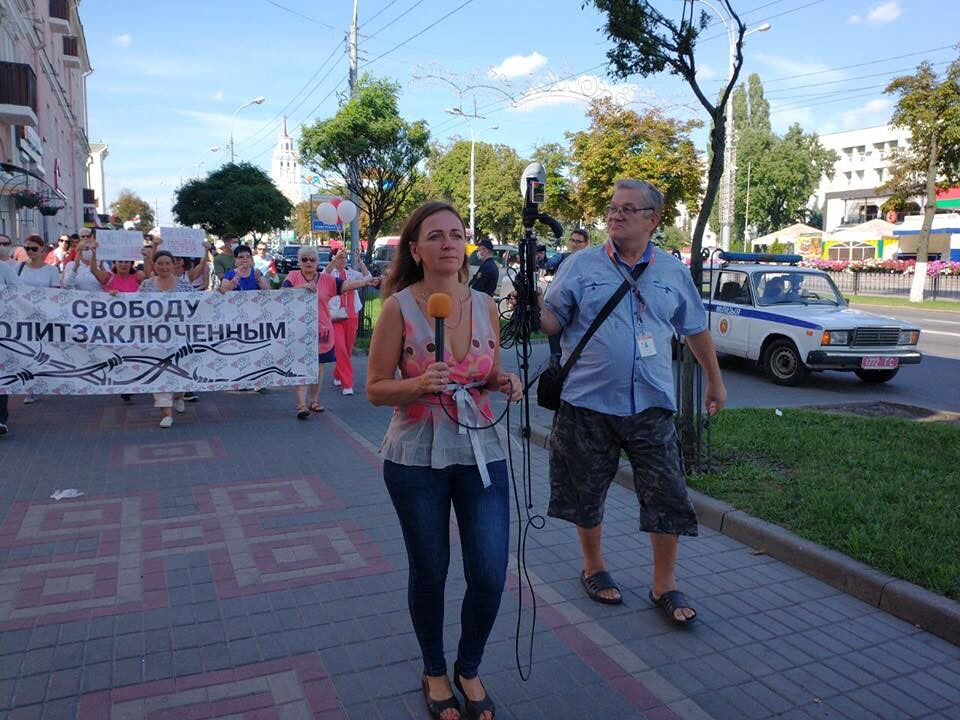
The protests in Belarus from 2020 to 2021 are a series of demonstrations and political actions in connection with the 2020 presidential election. The protests were mainly directed against the Belarusian regime and President Aliaksandr Lukashenka, who has been in power since 1994.
On election day, Sunday, August 9, Lukashenka declared himself the winner with more than 80% of the vote. This prompted people to react and take to the streets in peaceful protests. The police response was harsh, involving batons and water cannons. On election day, 120 people were arrested and one person was killed by the Belarusian police. Already ahead of the election, it was reported that 1,300 opposition members were arrested.
On August 14, opposition leader Sviatlana Tsikhanouskaya declared herself the winner of the presidential election, claiming she had received 60–70% of the vote. Many independent counts also confirm that Sviatlana Tsikhanouskaya is likely to have won.
On Sunday, August 16, over a hundred thousand demonstrators gathered in the capital Minsk. The demonstrators carried the white-red-white flag of the former Belarusian People’s Republic, which became a symbol of the protests and a sign of opposition to Lukashenka. The protests continued throughout the autumn across the entire country, but the regime suppressed all demonstrations with a heavy hand. Thousands were arrested. The authorities still continue to arrest or punish anyone who does not show support for the regime.
Since 2020, all independent Belarusian media outlets have been forced to close or go into exile. Independent journalists have been sentenced to long prison terms or forced into exile. Dozens of independent journalists remain imprisoned for reporting truthfully. The total number of political prisoners exceeds 1,000. As of 2026, journalists are still being imprisoned.
Freedom of expression
Freedom of expression includes the right to express and communicate opinions without censorship, restriction, or punishment. The United Nations declaration formulates this right as follows: “Everyone has the right to freedom of expression. This right includes freedom to hold opinions without interference and to seek, receive and impart information and ideas through any media and regardless of frontiers.” A similar text is found in the European Convention on Human Rights and the UN International Covenant on Civil and Political Rights. Freedom of expression is often regulated in national constitutions and concerns the relationship between the state and the individual.
Press freedom
Freedom of the press means that citizens and groups may publish text, video, and audio through books, the internet, or newspapers without prior review or censorship. Everyone also has the right to distribute media freely. Press freedom is often seen as a fundamental part of functioning democratic societies. Every citizen in a state with press freedom has the right to express their views as long as they do not violate other laws limiting press freedom. Restrictions to this freedom should only be done if it’s necessary to protect other fundamental rights.
For questions about the game or workshops related to it, please contact: Ingrid Svanfeldt
The project has been granted funding from the following foundations:
The Swedish Cultural Foundation in Finland, the Swedish-Finnish Cultural Foundation, the Foundation for Journalistic Culture – Jokes and the Foundation for Media and Development – Vikes.
Copyright © 2026 Svanfield OY